Contact us
Contact Nuveen
Thank you for your message. We will contact you shortly.
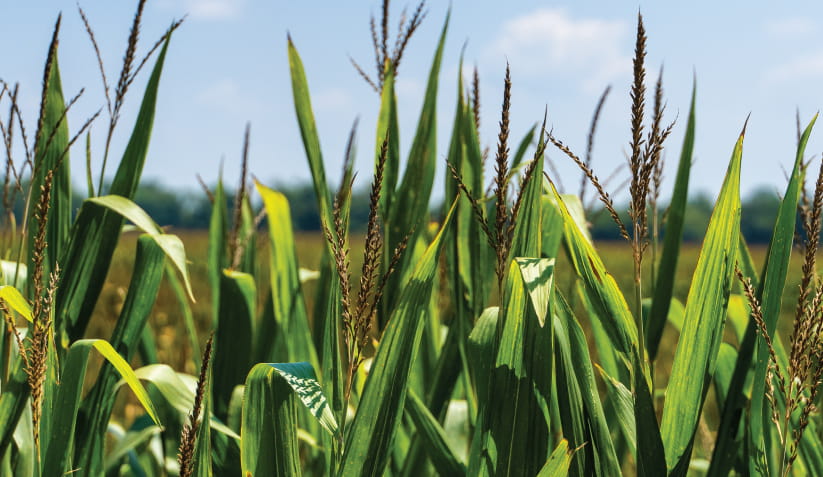
How does direct investment in farmland provide diversification, inflation protection, and return potential?
By 2050, the world's farmland will need to support more than 9.7 billion people—requiring a 60% increase in agricultural productivity from current levels.
Meanwhile, the developing world's expanding middle class continues to enhance its diet, consuming more protein and intensifying pressure on global grain supplies. At the same time, industrialization and urban development steadily encroach upon our planet's finite farmland resources.
As water scarcity intensifies, agricultural regions with sustainable water supplies—like much of the United States—will become implied water exporters through their crop production, commanding premium values in global markets.
These converging trends make direct investment in U.S. farmland an increasingly compelling opportunity. Beyond strong market fundamentals, farmland offers investors a potentially steady income stream, attractive risk-adjusted returns, low correlation to traditional assets, and a proven hedge against inflation.
This paper explores these dynamics and examines the growing opportunities for investors seeking exposure to farmland.
Related articles

The business of private credit: Quality matters in core middle market credit

Podcast: Credit discipline through the cycle-lessons from a pension fund

The business of private credit: Where core and upper middle market discipline diverges
Contact us

You are on the site for: Financial Professionals and Individual Investors. You can switch to the site for: Institutional Investors or Global Investors
Important information on risk
Past performance is no guarantee of future results. All investments carry a certain degree of risk, including the possible loss of principal, and there is no assurance that an investment will provide positive performance over any period of time. Certain products and services may not be available to all entities or persons. There is no guarantee that investment objectives will be achieved.
Investors should be aware that alternative investments are speculative, subject to substantial risks including the risks associated with limited liquidity, the potential use of leverage, potential short sales, currency exchange rates, and concentrated investments and may involve complex tax structures and investment strategies. Alternative investments may be illiquid, there may be no liquid secondary market or ready purchasers for such securities, they may not be required to provide periodic pricing or valuation information to investors, there may be delays in distributing tax information to investors, they are not subject to the same regulatory requirements as other types of pooled investment vehicles, and they may be subject to high fees and expenses, which will reduce profits.
As an asset class, agricultural investments are less developed, more illiquid, and less transparent compared to traditional asset classes. Agricultural investments will be subject to risks generally associated with the ownership of real estate-related assets, including changes in economic conditions, environmental risks, the cost of and ability to obtain insurance, and risks related to leasing of properties.
Not registered yet? Register