
Nuveen Infrastructure's 2025 Clean Energy Sustainability Report highlights the firm's progress in building a resilient, future-focused clean energy portfolio — and demonstrates how sustainability and long-term investment performance can go hand in hand.
Key highlights include:
- Delivering real impact: In 2025, the portfolio generated 6.42TWh of renewable electricity, enough to power approximately 1.2 million households. By doing so, we avoided over 1.7 million tonnes of CO₂ emissions, supported an estimated 1,175 direct jobs, conserved or restored 331 hectares of land, and contributed more than €115,000 in community funding.1
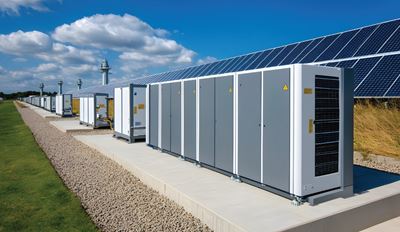
- Strategic growth and innovation: The year brought significant expansion. Nuveen entered two new markets — Ireland and South Korea — and made major advances in battery energy storage (BESS) through its Verdian platform, including the acquisition of a 493MW wind portfolio in Italy integrated with 576MWh of storage.
- Sustainability in practice: The report goes beyond headline numbers to explore how sustainability shapes aspects of asset management — from rigorous carbon data collection and biodiversity monitoring, to supply chain integrity, climate risk assessment and community investment.
Related insights

Webinar: Weathering the future

Powering the path to decarbonisation
Webinar: Unlocking value in battery storage


Contact us

















- +44 20 3727 8000
- 201 Bishopsgate, London, United Kingdom
1 All data displayed was calculated by Nuveen.
Important information on risk
Past performance is no guarantee of future results. All investments carry a certain degree of risk, including the possible loss of principal, and there is no assurance that an investment will provide positive performance over any period of time. Certain products and services may not be available to all entities or persons. There is no guarantee that investment objectives will be achieved.
As an asset class, real assets, such as Infrastructure, are less developed, more illiquid, and less transparent compared to traditional asset classes. Real asset investments are subject to various risks generally associated with the ownership of real estate-related assets and foreign investing, including but not limited to, fluctuations in property values, higher expenses or lower income than expected, changes in economic conditions, currency values, environmental problems and liability, the cost of and ability to obtain insurance, and risks related to leasing of properties.
Responsible investing incorporates Environmental Social Governance (ESG) factors that may affect exposure to issuers, sectors, industries, limiting the type and number of investment opportunities available, which could result in excluding investments that perform well.
This information does not constitute investment research as defined under MiFID.
Nothing set out in these materials is or shall be relied upon as a promise or representation as to the past or future. This material, along with any views and opinions expressed within, are presented for informational and educational purposes only as of the date of production/writing and may change without notice at any time based on numerous factors, such as changing market, economic or other conditions, legal and regulatory developments, additional risks and uncertainties and may not come to pass. There is no representation or warranty (express or implied) as to the current accuracy, reliability or completeness of, nor liability for, decisions based on such information, and it should not be relied on as such.
Investors should be aware that alternative investments are speculative, subject to substantial risks including the risks associated with limited liquidity, the potential use of leverage, potential short sales and concentrated investments and may involve complex tax structures and investment strategies. Alternative investments may be illiquid, there may be no liquid secondary market or ready purchasers for such securities, they may not be required to provide periodic pricing or valuation information to investors, there may be delays in distributing tax information to investors, they are not subject to the same regulatory requirements as other types of pooled investment vehicles, and they may be subject to high fees and expenses, which will reduce profits.
Nuveen considers ESG integration to be the consideration of financially material environmental, social and governance (ESG) factors within the investment decision making process. Financial materiality and applicability of ESG factors varies by asset class and investment strategy. ESG factors may be among many factors considered in evaluating an investment decision, and unless otherwise stated in the relevant offering memorandum or prospectus, do not alter the investment guidelines, strategy or objectives. Select investment strategies do not integrate such ESG factors in the investment decision making process.