The changing nature of participant engagement

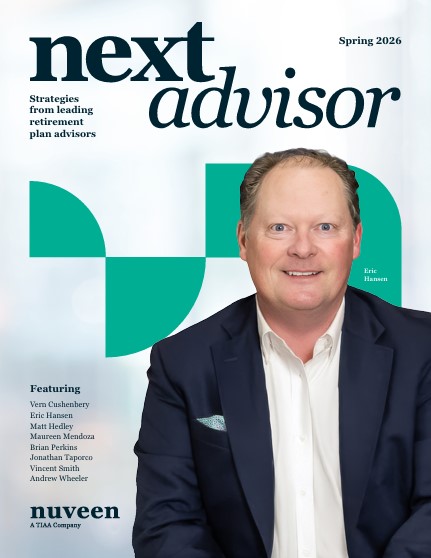
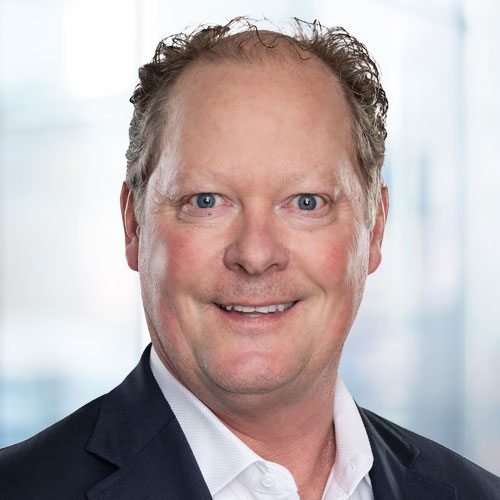
The retirement plan industry has never stood still, but the pace of change in recent years, driven by technology, regulation and a fundamental rethinking of what participant engagement actually means, has pushed advisors to reexamine everything. We spoke with Andy Wheeler, Senior Financial Advisor at Strategic Retirement Partners, and Eric Hansen, Founder of Hartmann-Astor Investment Consulting, about how the advisor’s role has evolved, what tools are reshaping the participant relationship and where the industry still has work to do.
From asset allocation to holistic planning
The clearest measure of how far the industry has changed its best practices is the nature of the conversations they are having with participants today compared to when they first started. The old model, as Andy recalls, was almost entirely built around portfolio construction. “Years ago, most of it was around education. Technology really wasn’t a huge portion of the retirement plan market. Everything was verbal, everything was in print. We had the old charts that pointed to the high risk funds, the low risk funds, and those became the most important component because we spent more time talking about how to build a portfolio for a participant, and less actually speaking about how they’re going to get themselves to retirement.”
Eric remembers a similar starting point, saying, “when I got started in the 401(k) space, we were still doing the one-on-one meetings and the group meetings. Our purpose was getting folks into the plan, talking to them about asset allocation, and, last, deferral rates. But as we’ve seen the industry evolve from stockbrokers to asset allocators, to financial planning, we’ve now evolved into talking more about income. The world is far more complex than it used to be, and the bulk of participants’ money is now in their 401(k), and the vast majority of them have no idea what to do about that. With all those complexities, I’m looking at how I can create a model to address these problems for participants.” Both advisors agree that target date funds, autoenrollment and autoescalation have helped to take some of the manual work out of those earlier-stage problems, freeing advisors to focus on more complex and personalized areas of advice and retirement planning once participants have an asset base built up. For Andy, that shift is most pronounced in his ongoing client conversations. “It really has become a lot more of a holistic approach. I have more conversations now with participants around credit card debt, and how to manage their day to day so that they can comfortably set aside money for retirement.” Eric sees a similar evolution and narrows down to specific parts of the retirement journey that require more guidance, adding, “it’s not necessarily the volume of help that’s needed, it’s where that help is needed. When they have a bed of assets, when they’re nearing retirement, that’s when they need a little bit more engagement and a little bit more handholding.”
Key takeaways
- The retirement plan advisor’s role has expanded well beyond education and asset allocation, evolving into a holistic, technology-driven practice centered on real retirement readiness.
- Autoenrollment has transformed savings outcomes, particularly for younger workers, but autoescalation and post-retirement income solutions remain underutilized and underdeveloped.
- AI tools offer significant promise for scalable, personalized participant engagement, but data security, quality control and human judgment remain essential guardrails.
A changed paradigm
While how advisors engage with participants has been in constant evolution, through technology and what level of advice participants need, Covid marked something of a watershed moment in giving advice in-person. Andy identifies the pandemic as the clearest inflection point in how participant engagement shifted, saying, “How I interact with participants has probably been one of the biggest changes in more recent years. I’m going to use Covid as that marker because I think it was the timeframe that changed everything. We essentially stopped doing in-person meetings, we entirely changed how we interact with participants, and it is for the better. We are able to scale much more now.”
My job now is to play quarterback. I don’t necessarily have to fulfill every role, but I do have to make sure that it jumps off correctly.
Eric agrees but also views the change as fundamental and systemic, with the emerging tools and technologies now available as a sufficient replacement for the traditional format. “With the advent of autoenrollment, autoescalation, target date funds, managed accounts, we’ve solved those initial problems. I very rarely do group meetings or one-on-ones anymore. You can meet that need through tools that we have at our disposal now.” The challenge both advisors identify is how to reach participants with genuinely relevant, personalized information in a way that is scalable, and that is where new technology can continue to shift the fundamentals of participant engagement.
AI, but qualified by questions of trust
One of the fastest moving technological spaces is the rise of AI tools, but their potential for use in retirement planning remains largely uncertain. While there is potential and enthusiasm, questions remain about data privacy and getting sponsors and participants comfortable with using the tools. Both Andy and Eric are actively exploring AI tools to bridge the gap between scalability and personalization, but both are candid about the promise and the pitfalls. Andy notes that AI tools can be useful within his practice, but careful guardrails have to be put in place, adding, “While we do use AI tools within our own workflows to help us with scale and streamlining operations, there are real concerns that warrant robust technical safeguards to ensure accuracy and data privacy.”
Eric is similarly cautious, drawing on a recent client interaction to illustrate how quickly data privacy becomes a live concern. “There will be some concern about how data is being used — is it safe? Is it secure? And we’ve got to be able to effectively answer that. I’m not sure that we have the response yet for that, but I feel like the benefits far outweigh the risks.” But Eric is exploring the tools that are out there, and sees the potential for scalability, reliable solutions and efficiencies. It is just a matter of getting sponsors comfortable with the data privacy issues.
Andy, however, would qualify initial progress, and wants to make sure that human advice remains most significant interaction, saying, “While some AI approaches are heading in the right direction, I have concerns when the AI models begin to offer direct advice, rather than just being used for education. AI should prompt engagement, not be the engagement itself.”
The advisor growing as a quarterback
The question of who is responsible for participant outcomes, be it the advisor, plan sponsor or participant, has also shifted. Andy describes a clear evolution in his own role, from educator to orchestrator. “Our role as advisors has really grown over the years. The recordkeeper was just a platform. The advisor provided the education. The administrator may have been the one to change the plan provisions every once in a while. Nowadays, the true retirement plan advisor is taking on a lot of those different roles. My job now is to play quarterback. I don’t necessarily have to fulfill every role, but I do have to make sure that it jumps off correctly.”
Eric takes that argument further, suggesting that advisors need to move from the periphery to the center of the participant relationship. “The advisor needs to become the center, more now than even the plan sponsor. When participants become uncomfortable due to uncertainty in their financial world, they’re apt to say, well, I need to change jobs. If we can solve that and create some comfort for these employees, that keeps their focus and helps them stay in their role.”
Autoenrollment, autoescalation and what comes next
On the question of auto features, both advisors are enthusiastic about what has already been achieved. Andy admits his initial skepticism about autoenrollment gave way once he saw the results in practice. “When it first came on, I was a little opposed to it. I felt like it was a decision by an employer that didn’t engage participants. But the more I’ve seen the success of it, and the more I have seen employees engage, I’ve changed my mindset. I think it’s one of the biggest moves that has been made in the industry overall. I’m seeing people in their twenties maxing out their retirement plan, because they have lower expenses, and they wouldn’t have been paying attention before autoenroll features brought them in.”
Eric echoes the sentiment, and extends it to what he sees as the next logical step. “Income solutions could well be the next evolution. There will be some comfort surrounding those solutions when they see that they can create true opportunities for their employees to have a paycheck-for-life system that’s institutional, low cost, and been well vetted.”
For both advisors, the destination is the same: a retirement industry where the right tools, the right technology and the right human judgment work together to ensure that participants do not arrive at retirement unprepared. As Andy puts it, the stakes of getting it wrong are too high to leave to chance. “It’s a huge change in life, and it really is almost a much bigger change than starting a family, because you readjust everything. Everything you decide, when you decide it, and how you decide it can have a massive impact 10, 15, 20 years down the road.” The tools are better than they have ever been. The challenge now is making sure they are used wisely.
Download the full PDF
Continue reading




Contact us

















- +44 20 3727 8000
- 201 Bishopsgate, London, United Kingdom
Endnotes
1CNBC. Apollo. 2026
2American Investment Council. 2025
Any guarantees are backed by the claims-paying ability of the issuing company.
Nuveen, and the third-party advisors featured throughout this publication, or any of their affiliates
or subsidiaries are not affiliated with or in any way related to each other. This material is prepared
by everyone included in the publication and the views of the third-party advisors do not necessarily
represent the views of Nuveen, its affiliates, or other Nuveen staff
This material, along with any views and opinions expressed within, are presented for informational
and educational purposes only as of the date of production/writing and may change without notice
at any time based on numerous factors, such as changing market, economic, political, or other
conditions, legal and regulatory developments, additional risks and uncertainties and may not come
to pass. There is no promise, representation, or warranty (express or implied) as to the past, future, or
current accuracy, reliability or completeness of, nor liability for, decisions based on such information,
and it should not be relied on as such. This material should not be regarded by the recipients as a substitute for the exercise of their own judgment. It is important to review your investment objectives,
risk tolerance and liquidity needs before choosing an investment style or manager.
Important information on risk
Past performance is no guarantee of future results. All investments carry a certain degree of risk, including the possible loss of principal, and there is no assurance that an investment will provide positive performance over any period of time. Certain products and services may not be available to all entities or persons. There is no guarantee that investment objectives will be achieved. See the applicable product literature for details.
Nuveen, LLC provides investment solutions through its investment specialists