
The global commercial real estate market has undergone a profound transformation since mid-2022. Rising interest rates and macroeconomic uncertainty have led to a significant repricing of real estate assets, with capital values correcting by approximately 20–25% across Europe, creating one of the most attractive entry points for real estate debt investment in over a decade.
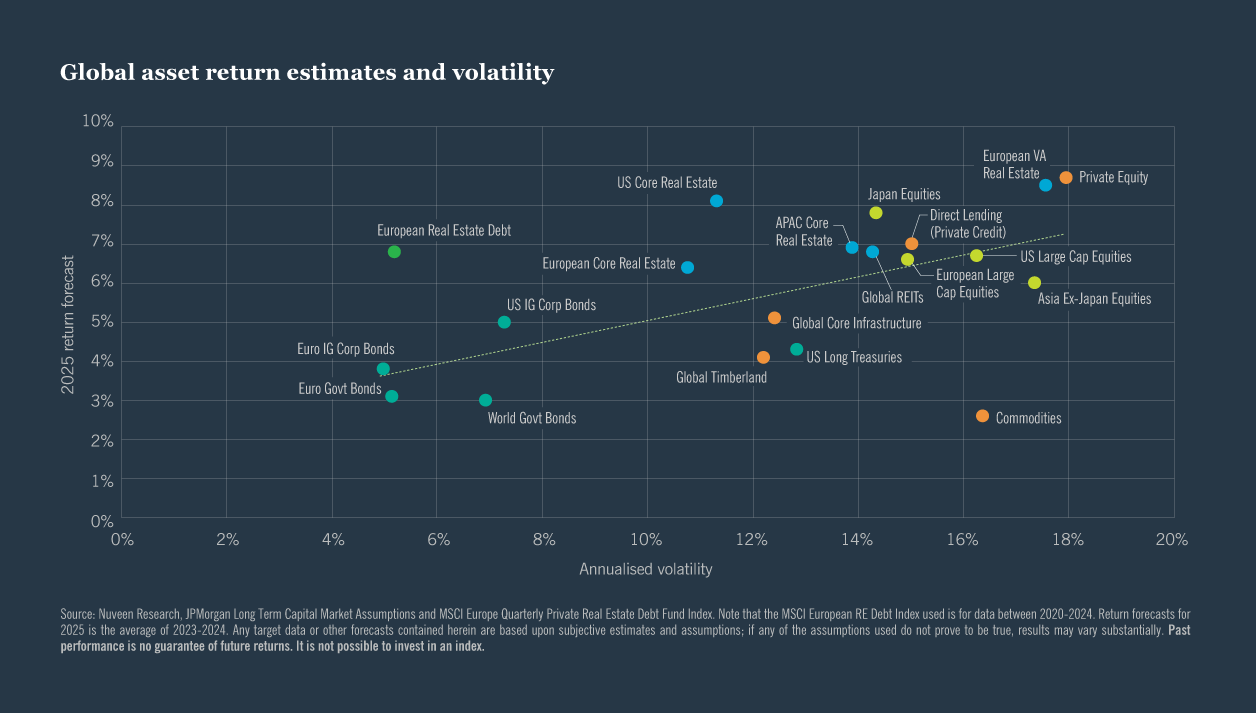
Our latest research reveals why over 60% of institutional investors are planning to increase their real estate debt allocations, and how this asset class offers compelling risk-adjusted returns with lower volatility than traditional alternatives. From regulatory tailwinds to improved lending standards, discover the factors positioning real estate debt as a strategic portfolio diversifier in today's market environment.
Learn more about our global debt capabilities
Seeks exposure to U.S. core-plus commerical real estate debt seeking capital preservation and diversification through institutional-quality loans including mezzanine, B-notes and whole loans
Seeks exposure to continental European CRE debt through senior, whole and selected mezzanine loans, aiming to offer income-focused returns from a protected position in the capital structure
Seeks exposure to U.K. CRE debt through senior, whole and selected mezzanine loans, aiming to offer income-focused returns from a protected position in the capital structure
Related articles

Why the case for debt and equity is strengthening together

Riding the wave up with European levered debt

The structural case for transitional CRE debt: A perspective for U.S. life insurers
About the author

Contact us

















- +44 20 3727 8000
- 201 Bishopsgate, London, United Kingdom